
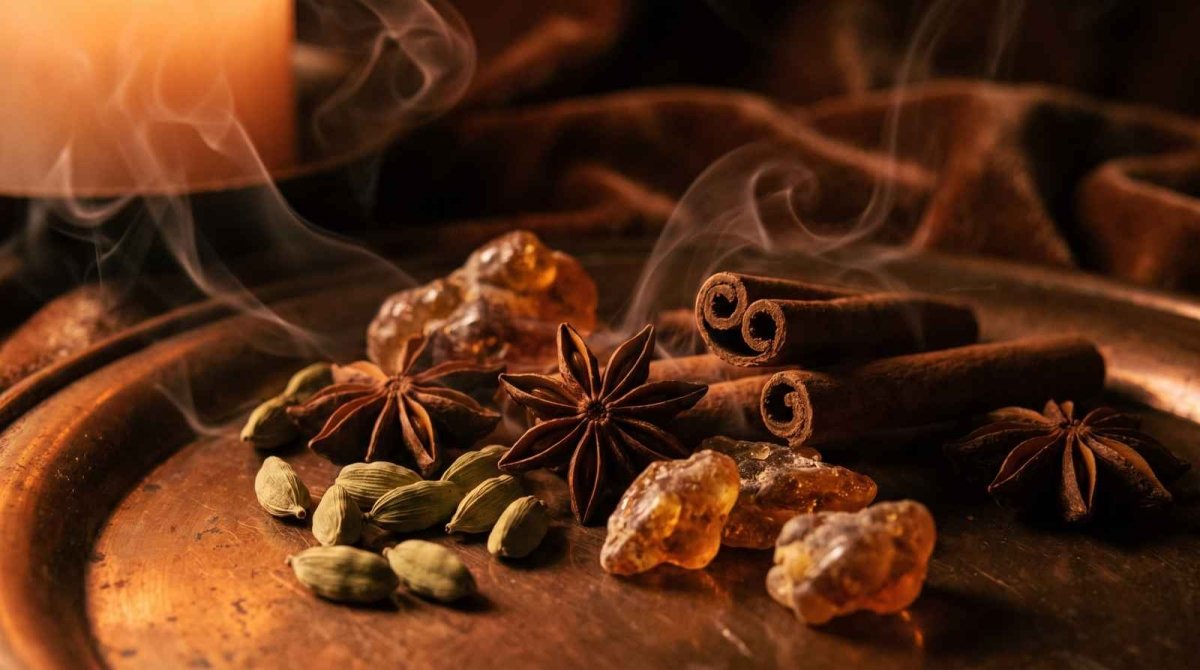
Oriental notes in men's perfumes: spices, resins, and amber
Oriental Notes in Men's Perfumes: Spices, Resins, and Amber
Oriental notes represent the sensual and deeply captivating side of men's perfumery. Unlike fresh citrus notes or dry woods, oriental notes envelop the wearer in an aura of warmth, mystery, and aromatic power. These notes have their roots in Middle Eastern perfumery traditions and the historical spice trade, creating fragrances that are as complex as they are magnificent.
Amber: The Sensual Heart of Oriental Perfumery
Amber is the defining note of an oriental perfume's character. In perfumery, "amber" rarely refers to natural ambergris (a substance produced by sperm whales, now protected); instead, it is synthetically created using compounds like ambroxan and iso e super odorants. These synthetic ingredients create an accord that is simultaneously sweet, warm, and slightly animalic.
Amber generates a sensation of bodily warmth, as if the perfume itself breathes on the skin. It is the note that creates that "skin-like" quality characterizing the best sensual perfumes. When a perfumer selects amber for a men's perfume, they are creating an intimate and enveloping experience.
Ambergris: The Marine Luxury of Inferno
True ambergris is extraordinary: when present in a perfume composition, it introduces marine, salty, and slightly animalic notes that have no perfect synthetic equivalents. In Inferno Pheromone Perfume 2.0, the ambergris in the base note creates a magnetic quality that is simultaneously warm and fresh, inviting and mysterious.
Ambergris interacts wonderfully with the cedar in the base, creating an accord that evolves over time. In the first few minutes, cedar dominates with its sharpness. Over hours, ambergris slowly emerges, creating a base that smells of the sea, bodily warmth, and pure sophistication.
Oud: The Soul-Capturing Ingredient
Oud is the quintessential oriental ingredient. Derived from the resinous wood of Aquilaria trees infected by fungi, oud represents the pinnacle of luxury in perfumery. Superior quality natural oud can cost more than gold per gram.
The profile of oud is unmistakable: sweet, slightly animalic, intense, and penetrating. A Cambodian oud is sweet and almost floral, with soft wood notes. An Indian oud is darker, more animalic, with earthy depth. A Laotian oud is the most complex, with aromatic layering that evolves over hours.
Oud is not a note for everyone. It is polarizing, intense, and requires confidence to wear. But for those who appreciate its complexity, oud is addictive.
Oriental Spices: Cinnamon, Cardamom, Pepper
Spices are the fire of oriental notes. Cinnamon introduces spicy sweetness and warmth, with soft wood notes. Cardamom produces a greener, slightly fresh spicy quality. Pepper contributes pungency and dynamism. These spices, cultivated in the tropical climates of the Fertile Crescent and South Asia, have fascinated European noses for centuries.
In modern oriental perfumery, spices are precisely dosed. An excess creates a perfume that smells like dollar-store baking spices. A minimal amount creates a "pinch" effect, a quality of movement that makes a fragrance unforgettable.
Resins: Frankincense, Benzoin, Copal
Resins are the most ancient and fascinating notes in oriental perfumery. Frankincense introduces balsamic, slightly smoky, and almost spiritual notes. Benzoin, extracted from the Styrax tree, produces sweet, slightly vanilla, and very warm notes. Copal introduces slightly citrusy and balsamic notes with a heavy resinous quality.
These resins evoke ancient temples, incense rituals, and a sense of almost timelessness. In modern men's perfumery, resins are used to create a quality of mystery and depth.
Vanilla: The Sweetness That Supports
Vanilla is perhaps the most important sweet note in men's oriental perfumes. Unlike vanilla in a feminine perfume, which can be dessert-sweet and gourmand, vanilla in a masculine oriental is subtle, warm, and supportive. It creates a base that softens more aggressive spices and adds depth to the amber accord.
When to Wear an Oriental Perfume
Oriental perfumes are ideal for evening wear, especially in autumn and winter months. Their intrinsic warmth and aromatic power make them perfect for formal occasions, elegant dinners, and refined environments. In summer, a light oriental perfume can work in the evening, but the heat of a summer day rarely favors these heavy fragrances.
The Oriental Accord of Inferno: Pure Magnetism
Inferno Pheromone Perfume 2.0 is classified as Woody Oriental, a family that combines the structure of woods with the sensuality of oriental notes. The cedar and ambergris base creates an accord that is oriental in its warmth, yet woodily grounded in its structure. This balance makes Inferno versatile: sophisticated enough for evening, but dry and structured enough for less formal occasions.
Ambergris, in particular, represents excellence in the use of oriental notes in modern men's perfumery. It is an ingredient that requires mastery to be used well, and Inferno implements it almost masterfully.
→ Discover Inferno Pheromone Perfume 2.0 — From €65.

Written by Alessandro Bello



Leave a comment
This site is protected by hCaptcha and the hCaptcha Privacy Policy and Terms of Service apply.