
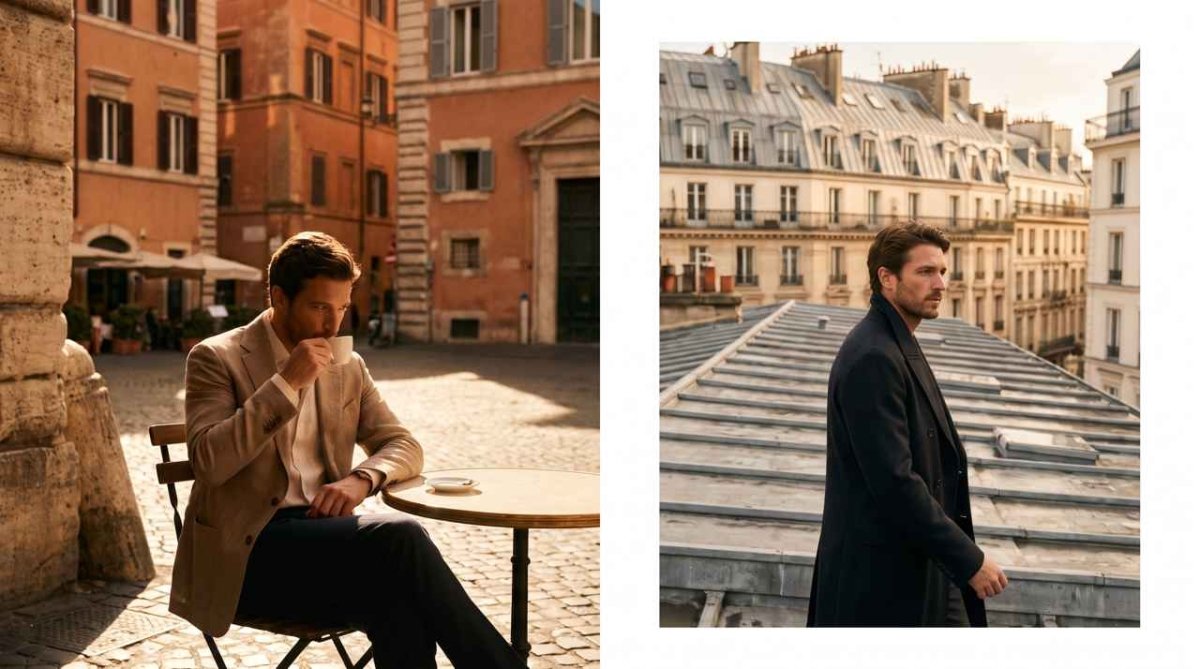
Italian vs. French Perfumes: Differences in Style and Philosophy
Italian vs French Perfumes: A War of Style and Philosophy
French perfumery has dominated for centuries with its tradition of the "grand maison" (Chanel, Dior, Guerlain). But the Italian olfactory school is emerging in 2025 as a sophisticated alternative: less formal, more sensual, based on natural Mediterranean ingredients (lemon, bergamot, ambergris), and more innovative. Both are excellent, but they represent two completely different philosophies on the role of perfume in life.
The French Tradition: Formality and Heritage
France is the birthplace of modern perfumery. Grasse, the perfume city in the South of France, has been the world center of fragrance since the 18th century. Historic French brands (Chanel, Guerlain, Dior, Hermès) have set the standards of excellence that the world still follows.
The French olfactory philosophy is characterized by:
- Rigorous academic structure: Classic pyramid (top-heart-base) perfected for decades
- Sophisticated but synthetic ingredients: The French masterfully use synthetic molecules created in the laboratory (Calone, Hedione, Iso E Super)
- Classic balance: French perfumes are never "too much" — too sweet, too strong, too unusual. It is a conscious choice
- Brand legacy and history: Chanel N°5, Dior Sauvage, Guerlain L'Homme — brands tell stories of heritage and continuity
- Formality and context: French perfumes are often associated with specific occasions (Chanel for elegance, Dior for confidence, Guerlain for romance)
- Premium price for tradition: The cost reflects historical heritage more than material quality
A French perfume is a declaration of connection to a grand tradition. It is conservative, reliable, recognizable. Whoever wears Chanel N°5 knows they belong to a line of elegance that dates back a century.
The Italian School: Mediterranean Sensuality and Innovation
Italy does not have the centuries-old tradition of Grasse, but it has something more precious: a direct connection to the natural ingredients of the Mediterranean and a philosophy of innovation without reverence for traditions.
The Italian olfactory philosophy is characterized by:
- Rooted natural ingredients: Sorrento lemon, Calabrian bergamot, ambergris, cedar — perfumes that speak of geography, not laboratories
- Sensuality over formality: Italian perfumes seduce, they do not settle. They are built for personal attraction, not social conformity
- Technological innovation: While the French cling to their classic formulas, the Italians innovate (see Desiros with patented pheromones)
- Accessibility with quality: Modern Italian perfumes offer luxury at a reasonable price, not at €300+ like Creed
- Immediate emotional connection: An Italian perfume makes you feel Mediterranean from the first spritz — sun, sea, warmth
- Less brand nostalgia, more brand innovation: Italian brands do not live off legacy, but off current results
An Italian perfume is an immediate sensory experience. It is warm, inviting, sometimes provocative. Whoever wears an Italian perfume knows they are making a personal choice, not conforming to a historical canon.
Comparison Table: Two Olfactory Philosophies
| Aspect | French School | Italian School |
|---|---|---|
| Ingredient Base | Sophisticated synthetics (Calone, Hedione) | Natural Mediterranean (citrus, amber) |
| Formulation Approach | Academic, classic pyramid | Experimental, natural evolution |
| Primary Appeal | Tradition, heritage, formality | Sensual, innovative, immediate |
| Price | High (50-300+), often for brand | Moderate (30-100), for quality |
| Innovation | Conservative, small steps | Radical (e.g., pheromones, tech) |
| Number of Variants | Few, very historical (Chanel 5) | Many, constant experimentation |
| Occasion of Use | Formal, specific | Daily, personal |
| Consumer Identity | Traditionalist, conservative | Modern, conscious |
| Historical Examples | Chanel, Dior, Guerlain, Hermès | Prada, Valentino, Desiros |
Case Studies: The Concrete Comparison
Dior Sauvage (French) vs Inferno Desiros (Italian)
Dior Sauvage is the global best-seller: Eau de Parfum (~15%), fresh ambroxan profile, light iris. It's perfect. It's also the perfume of every man who doesn't know what perfume to choose. It costs €70-80, and has remained unchanged since 2015. It is excellent, reliable, universal.
Inferno is its opposite: 25% Extrait, specific profile with Sorrento lemon, pink pepper, spicy cedar, ambergris, patented pheromones. It is not universal — it is personal. Whoever chooses it knows exactly what perfume they want. It costs €65 and evolves. It is less "safe" than Sauvage, but more memorable.
The question is not which is better, but which represents you: do you want the reliability of tradition (Sauvage) or the sophistication of conscious choice (Inferno)?
The Future of Perfumery: Hybridization
In 2025, the rigid division between French and Italian is blurring. Historic French brands acquire innovative Italian brands. Italian designers (Prada, Gucci, Valentino) compete globally. Desiros itself represents this hybridization: modern technology (pheromones), Italian quality (Sorrento, Calabria), strategic accessibility (€65 for Extrait).
The intelligent consumer does not choose between "French" and "Italian," but between "tradition" and "innovation." Both are valid, depending on where you are in your life.
Final Thoughts
French perfumery is the world's conservatory — tradition, mastery, heritage. The Italian school is the conservatory of tomorrow — innovation, sensuality, immediate sensory gratification. If you love history and formality, go French. If you love sophistication with modern awareness, go Italian. In 2025, the choice is not geographical, it is philosophical.
→ Discover Inferno Pheromone Perfume 2.0 — From €65.

Written by Alessandro Bello

.%20But%20the%20Italian%20olfactory%20s...)
Leave a comment
This site is protected by hCaptcha and the hCaptcha Privacy Policy and Terms of Service apply.